Job Description
Marketing StatementRide BART to a satisfying career that lets you both: 1) make a difference to Bay Area residents, and 2) enjoy excellent pay, benefits, and employment stability. BART is looking for people who like to be challenged, work in a fast-paced environment, and have a passion for connecting riders to work, school and other places they need to go. BART offers a competitive salary, comprehensive health benefits, paid time off, and the CalPERS retirement program.
Job Summary
Pay Rate
Non-Represented Salary Grade E10
Annual Salary: $172,056.00 - $260,665.00
Note: The starting negotiable annual salary offer will be between $ 172,056.00 - $227,220.00 to commensurate with education and experience.
Reports To
Group Manager, Engineering
Days Off
Variable
Who May Apply
All current BART employees and Future BART employees
Current Assignment
This announcement will be used to establish an eligibility pool to fill vacancies that may occur within the next twelve (12) months.
The San Francisco Bay Area Rapid Transit District (BART) is seeking a collaborative and results-driven Manager of Track Engineering to lead the engineering efforts that keep one of the nation's largest rail transit systems safe, reliable, and moving. This position provides leadership for track engineering, capital improvement projects, infrastructure renewal, and engineering support for daily operations while partnering closely with Maintenance, Operations, Capital Delivery, and Safety to deliver practical, innovative solutions that enhance system performance.
The ideal candidate is an experienced engineering leader who thrives in a fast-paced transit environment and is passionate about improving rail infrastructure. They inspire teams, build collaborative partnerships, and provide innovative engineering solutions that support safe, reliable service while advancing BART's long-term infrastructure goals.
The most qualified candidates for this position will have highly developed competencies in the following areas, which will be reinforced with related work experience and will be clearly articulated during the selection process:
- Leadership of railway track engineering, maintenance, and capital improvement programs.
- Managing complex engineering projects, consultant contracts, budgets, and competing priorities.
- Knowledge of track design, inspection, maintenance, and applicable FRA, CPUC, and industry standards.
- Building collaborative relationships across engineering, operations, maintenance, contractors, and regulatory agencies.
- Leading, mentoring, and developing high-performing engineering teams.
- Analyzing complex technical issues, making sound decisions, and implementing practical solutions.
- Driving continuous improvement, innovation, and asset management strategies that enhance safety, reliability, and system performance.
Please note : Applications will be reviewed on a rolling basis in multiple rounds and candidates are encouraged to apply early. Applications for this posting will be reviewed based on the following schedule:
- Round 1: August 7 - August 27
- Round 2: August 28 - September 17
- Round 3: September 18 - October 2
The District reserves the right to close this recruitment at any time after the completion of a review round if a sufficient number of qualified candidates have been identified to advance in the selection process. Therefore, candidates are strongly encouraged to apply as early as possible, as subsequent review rounds may not be conducted.
Selection & Application Process
All applicants must apply online at www.bart.gov/jobs . Applications must be completed in full and include all requested information, including dates of employment, positions held, hours worked, and a detailed description of duties performed.
Applicants may attach a resume to provide supplemental information; however, the resume does not substitute for completing the application form in its entirety. Only information included in the application at the time of submission will be used to determine whether applicants meet the minimum qualifications for the position. All application materials must be submitted by the closing date and time listed on the job announcement. Applications received after the closing deadline will not be considered.
Applicants who require assistance with the online application process may contact the Talent Acquisition Division at (510) 464-6112 or employment@bart.gov .
The selection process for this position may include one or more of the following: a skills or performance demonstration, written examination, and/or panel or individual interview.
All applications will be reviewed by the Talent Acquisition Division to determine whether applicants meet the established Minimum Qualifications (MQs). Applicants who meet the MQs may be referred to the hiring department for further evaluation as part of the selection process.
The selected candidate must demonstrate a work history reflecting reliability and dependability and may be required to provide copies of certificates, diplomas, or other documentation required by law, including proof of authorization to work in the United States.
Pre-employment processing will include a background check. This requirement does not apply to current full-time District employees unless the position requires additional evaluations or clearances.
Examples of Duties
Plans, directs, coordinates, and reviews the work plan for assigned staff or contractors; assigns work activities, projects, and programs; reviews and evaluates work products, methods, and procedures; meets with staff, maintenance team, stakeholders and/or contract service providers to identify and resolve problems.
Prepares, oversees, administers, and monitors engineering consultant contracts for assigned track projects including new design and construction, and maintenance and operational support; reviews and approves final project plans, specifications, and cost estimates prepared by in-house and consulting engineers.
Selects, trains, motivates, and evaluates assigned engineering personnel; provides or coordinates staff training; works with employees to correct deficiencies; implements discipline and termination procedures.
Directs the preparation of plans, specifications, cost estimates, requests for proposals and bid documents for District's track engineering projects, or construction and maintenance work.
Oversees the development of the District Track Programs to ensure compliance with District's track standards or California Public Utilities Commission (CPUC) standards.
Manages the development, proposal, and design of solutions for service improvements; interfaces with host railroads and other agencies to implement proposed improvements.
Manages and participates in the development and implementation of track engineering goals, objectives, policies, and priorities; recommends and administers policies and procedures.
Monitors and evaluates the efficiency and effectiveness of service delivery methods and procedures; recommends, within departmental policy, appropriate service and staffing levels.
Monitors developments and legislations related to assigned area of responsibility; evaluates impact upon district or operations; recommends and oversees implementation of equipment, practices, and procedural improvements.
Oversees and participates in the development and administration of the division's annual budget; participates in the forecast of funds needed for staffing, equipment, materials and supplies; monitors and approves expenditures; implements adjustments.
Serves as the liaison for the Track Engineering Division with other divisions, departments and outside agencies; provides technical assistance to the Legal Department and serves as an expert witness; negotiates and resolves sensitive and controversial issues.
Inspects on-going track construction projects to ensure improvement; may be required to drive District vehicles to track construction sites.
Provides responsible staff assistance to the Track Engineering Group Manager.
Responds to emergency situations related to safe operation of the District's track and related structures, for instance, situations such as derailments, track buckle, track defects causing trains to slow down.
Serves as staff on a variety of boards, commissions, and committees; prepares and presents periodic and special reports regarding track engineering and construction activities to management staff or other departments and other necessary correspondence.
Attends and participates in professional group meetings; stays abreast of new trends and innovations in the field of track design, maintenance, inspection and repair.
Minimum Qualifications
Education:
Possession of a bachelor’s degree in Track Engineering, Civil Engineering, Mechanical Engineering, or a closely related field from an accredited college or university.
Experience:
The equivalent of five (5) years of full-time professional-level engineering experience related to the construction, maintenance, and design of railway track and structures, which must have included at least two (2) years of supervisory experience.
License or Certificate:
Registration as a professional engineer in the State of California preferred.
Substitution:
Additional professional experience as outlined above may be substituted for the education on a year-for-year basis.
Other Requirement:
Must possess a valid California driver’s license and have a satisfactory driving record.
Must be willing to work on weekends and at night, occasionally or as needed, to oversee and serve as track engineering subject matter expert to support track safety, inspection, construction, and maintenance needs.
Knowledge and Skills
Knowledge of:
- Operations, services, and activities of a comprehensive track engineering program
- Principles and practices of track engineering in rail transportation
- Principles and practices of track inspection, track defect root cause analysis
- Principles and practices of project scheduling and management
- Principles and practices of program development and administration
- Construction materials, methods, and equipment used in track engineering projects
- Railroad track design and construction, bridge, and structure design and construction
- Principles and practices of budget preparation and administration
- Principles of supervision, training, and performance evaluation
- Pertinent government codes, regulations, and provisions
- Related Federal, State, and local laws, codes, and regulations including FRA and CPUC
Skill in:
- Overseeing and participating in the management of a comprehensive track engineering program
- Overseeing new track construction, track renewal and upgrades, major track repairs related to track incidents
- Overseeing, directing, managing, and coordinating the work of lower-level staff
- Selecting, supervising, training, and evaluating staff
- Participating in the development and administration of goals, objectives, and procedures
- Planning, organizing, directing, reviewing, and evaluating the activities of professional staff and contract consultants on assigned projects
- Conducting track inspections and establishing a track inspection program including the use of rail inspection vehicle, ultrasonic test car, and visual track inspections.
- Preparing and administering large program budgets and contracts; project feasibility studies and cost estimates
- Preparing clear and concise administrative and financial reports
- Managing the services of outside consultants
- Preparing clear, concise, and complete reports on civil and structural design project activities
- Analyzing problems, identifying alternative solutions, projecting consequences of proposed actions and implementing recommendations in support of goals related to track issues
- Researching, analyzing, and evaluating new service delivery methods and techniques
- Interpreting and applying Federal, State, and local policies, laws, and regulations
- Establishing and maintaining effective working relationships with those contacted in the course of work
Equal Employment Opportunity GroupBox1
The San Francisco Bay Area Rapid Transit District is an equal opportunity employer. Applicants shall not be discriminated against because of race, color, sex, sexual orientation, gender identity, gender expression, age (40 and above), religion, national origin (including language use restrictions), disability (mental and physical, including HIV and AIDS), ancestry, marital status, military status, veteran status, medical condition (cancer/genetic characteristics and information), or any protected category prohibited by local, state or federal laws.
The BART Human Resources Department will make reasonable efforts in the examination process to accommodate persons with disabilities or for religious reasons. Please advise the Human Resources Department of any special needs in advance of the examination by emailing at least 5 days before your examination date at employment@bart.gov .
Qualified veterans may be eligible to obtain additional veteran's credit in the selection process for this recruitment (effective Jan. 1, 2013). To obtain the credit, veterans must attach to the application a DD214 discharge document or proof of disability and complete/submit the Veteran's Preference Application no later than the closing date of the posting. For more information about this credit please go to the Veteran's Preference Policy and Application link at www.bart.gov/jobs .
The San Francisco Bay Area Rapid Transit District (BART) prides itself in offering best in class benefits packages to employees of the District. Currently, the following benefits may be available to employees in this job classification.
Highlights
- Medical Coverage (or $350/month if opted out)
- Dental Coverage
- Vision Insurance (Basic and Enhanced Plans Available)
- Retirement Plan through the CA Public Employees’ Retirement System (CalPERS)
- 2% @ 55 (Classic Members)
- 2% @ 62 (PEPRA Members)
- 3% at 50 (Safety Members - Classic)
- 2.7% @ 57 (Safety Members - PEPRA)
- Reciprocity available for existing members of many other public retirement systems (see BART website and/or CalPERS website for details)
- Money Purchase Pension Plan (in-lieu of participating in Social Security tax)
- 6.65% employer contribution up to annual maximum of $1,868.65
- Deferred Compensation & Roth 457
- Sick Leave Accruals (12 days per year)
- Vacation Accruals (3-6 weeks based on time worked w/ the District)
- Holidays: 9 observed holidays and 5 floating holidays
- Life Insurance w/ ability to obtain additional coverage
- Accidental Death and Dismemberment (AD&D) Insurance
- Survivor Benefits through BART
- Short-Term Disability Insurance
- Long-Term Disability Insurance
- Flexible Spending Accounts: Health and Dependent Care
- Commuter Benefits
- Free BART Passes for BART employees and eligible family members.
Closing Date/Time: 10/2/2026 11:59 PM Pacific
BART (Bay Area Rapid Transit)
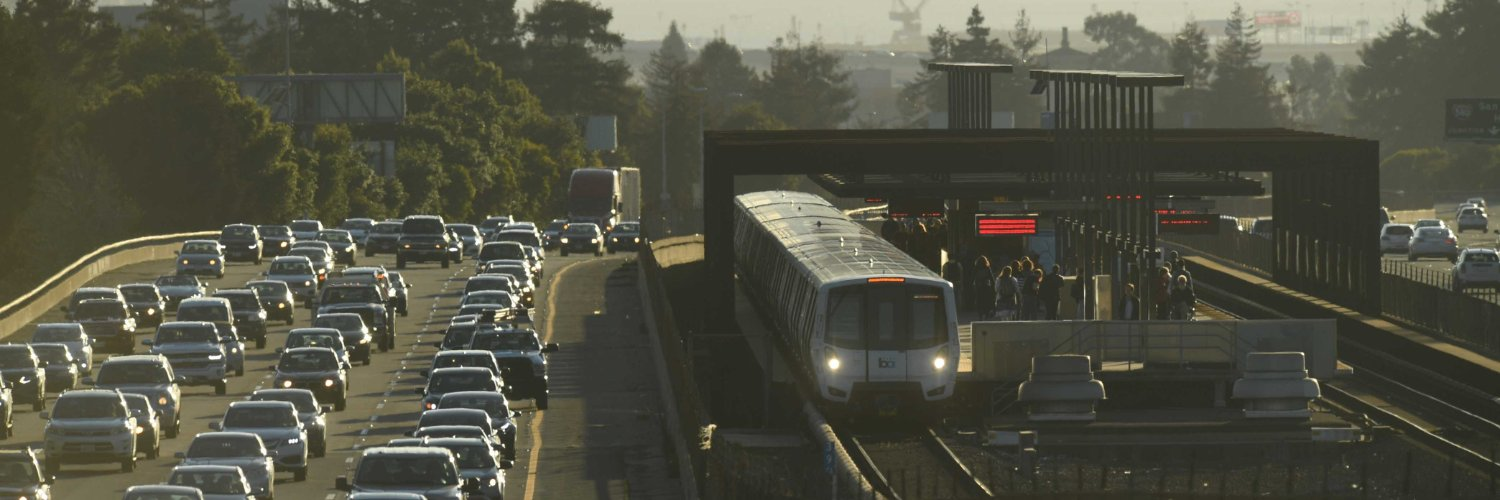
The San Francisco Bay Area Rapid Transit District (BART) is a heavy-rail public transit system that connects the San Francisco Peninsula with communities in the East Bay and South Bay. BART service currently extends as far as Millbrae, Richmond, Antioch, Dublin/Pleasanton, and Berryessa/North San José. BART operates in five counties (San Francisco, San Mateo, Alameda, Contra Costa, and Santa Clara) with 131 miles of track and 50 stations.
From the opening of service in 1972 to the present day, BART has enhanced the quality of life in the Bay Area by providing rapid and reliable transportation. Today, the BART system is essential to the health of our region’s economy—connecting workers and businesses, and relieving regional traffic congestion. At the same time, BART is the backbone of the region’s public transit system, accommodating people of all income levels as well as youth, seniors, and people with disabilities. By reducing the need to drive, BART reduces emissions and air pollution, supporting a healthier environment.
BART ridership has been impacted by the COVID-19 pandemic and remote work trends in the Bay Area. Prior to the pandemic, BART served 405,000 trips on an average weekday. Track the latest ridership trends here.
BART provides fast, reliable transportation to downtown offices, shopping centers, tourist attractions, entertainment venues, universities and other destinations for Bay Area residents and visitors alike.
MORE JOBS
-
$21.61 - $29.17 Hourly - 29 Hourly
Recreation Specialist II - Aquatics ($21.61/hour - $29.17/hour)
- Hayward, California
- Hayward Area Recreation and Park District
- Jul 28, 2026
-
$
Aircrew Rescue Swimmer & Navy Diver
- Pineville, Kentucky
- U.S. Navy
- Sep 14, 2026

-
$
Boatswain’s Mate
- Pierre, South Dakota
- U.S. Navy
- Sep 14, 2026
-
$99,204.00 - $139,596.00 Annually
Assistant Engineer
- Laguna Beach, California
- CITY OF LAGUNA BEACH, CA
- Aug 01, 2026
-
Head Women's Volleyball Coach
- Rohnert Park, California
- Sonoma State University
- Aug 13, 2026

-
Army Part-Time - 200 Careers, Paid Training, 30 Days PTO
- Santa Clara, California
- U.S Army Reserve
- Sep 14, 2026