-
Summary
Firefighter Position
To assist Fire Personnel with a variety of day to day work including emergencies such as fire alarms, rescue calls, and local disasters; fire prevention and inspections; and public education and outreach. Supervision Received and Exercised Receives direct supervisionfrom assigned Company Officer and administrative supervision from assigned Battalion Chief, Division Chief and the Fire Chief.
Essential Duties and Responsibilities
Examples of Duties The following duties are typical for this classification. Incumbents may not perform all of the listed duties and/or may be required to perform additional or different duties from those set forth below to address business needs and changing business practices.
- Respond to fire alarms, hazardous materials incidents, rescues, and other emergency operations as requested.
- Assist at the scene of fires and other emergencies with suppression, evacuation, crowd control, mop up, and other related functions.
- Operate a variety of firefighting equipment.
- Assist with laying hose at fire scene.
- Assist at the scene of vehicle accidents.
- Provide emergency medical assistance for the injured and ill.
- Perform basic inspection and repair of firefighting equipment.
- Test fire equipment including fire hoses and hydrants.
- Clean and maintain station living areas.
- Participate in training sessions and emergency assistance drills.
- Use machine hand tools, carpenter's tools, breathing apparatus, axes, shovels, chain saws and extrication equipment.
- Assist with the inspection of structures and facilities to assure compliance with fire and building code regulations.
- Assist with public education presentations and programs.
- Maintain logs and records.
- Drive emergency equipment.
- Interact politely and effectively with the public.
- Communicate clearly and concisely orally and in writing.
- Other duties as assigned.
Minimum Qualifications
Position Requirements at Application Qualifications General Requirements:
- 18 years of age.
- Graduation from High School or GED.
- Successfully completed accredited Fire Fighter Academy
- Valid California Drivers' License.
- Pass a background and medical screening.
- Valid CPR certification
Technical Requirements:
- Pass Firefighter Candidate Testing Center (FCTC) with a score of 70% or higher
- Possession of a valid Candidate Physical Agility Test (CPAT) card no older than one year from the opening date of this application.
- Pass the 40 hour basic firefighter training and related written skills test.
- Attend 12hrs of training per month
Desirable:
- Can respond from home or work place to the Marina Fire Station within thirty (30) minutes.
- California Emergency medical technician Basic (EMT-B) Certificate.
- Fire Fighter I Certificate.
Knowledge, Skills & Abilities Ability to:
- Attend meetings scheduled by the Fire Department.
- Act quickly and calmly in emergency situations. Apply fire safety codes and ordinances.
- Follow written and oral instructions.
- Operate a variety of fire suppression equipment. Drive emergency rescue vehicles as required.
- Fight fires using correct methods and techniques.
- Learn and practice safe work habits.
- Engage in strenuous physical activity during emergency situations.
Physical Demands and Working Conditions
Physical Demands Physical mobility to climb stairs in full protective clothing while carrying heavy equipment on shoulders, dragging hose lines from fire apparatus to the fire occupancy and pulling an uncharged hose line around obstacles while remaining stationary, carrying power tools to and from fire apparatus, placing a ground ladder at a fire structure and extending the ladder to the roof or window, using force to open a locked door or to breach a wall, searching for victims with limited visibility in an unpredictable area, removing a victim or injured partner from a fire scene, breaching and pulling down ceiling to check for fire Working Conditions A firefighter is required to wear protective gear, carry appropriate tools, and utilize self-contained breathing apparatus, weighing a combined total of 100 pounds, while performing many of the emergency related duties. Firefighters work in a variety of very hot and very cold temperatures, and often in a wet environment. The firefighter must be able to respond physically to alarms and/or calls for help and be in a full brisk walk from a standstill or sleep, in a matter of seconds. While performing emergency aid, a firefighter may lift and carry victims and move equipment requiring the use of stomach and back muscles. It is required that they be able to hear a variety of warning devices and alarms, gas leaks or calls for help. Tools used by a firefighter require precise arm-hand positioning movements such as when operating a chain saw or using emergency medical equipment. The operation of said equipment often requires the coordinated movement of more than one limb simultaneously. Emergency situations may require work to be performed in small, cramped crawl spaces, areas where vision is limited, and/or heights including roof-tops and ladders. Balance is required working in slippery wet conditions, maneuvering on beams and other structural parts of buildings, hillsides, and fences.
-
Job Description
Firefighter Position
To assist Fire Personnel with a variety of day to day work including emergencies such as fire alarms, rescue calls, and local disasters; fire prevention and inspections; and public education and outreach. Supervision Received and Exercised Receives direct supervisionfrom assigned Company Officer and administrative supervision from assigned Battalion Chief, Division Chief and the Fire Chief.
Essential Duties and Responsibilities
Examples of Duties The following duties are typical for this classification. Incumbents may not perform all of the listed duties and/or may be required to perform additional or different duties from those set forth below to address business needs and changing business practices.
- Respond to fire alarms, hazardous materials incidents, rescues, and other emergency operations as requested.
- Assist at the scene of fires and other emergencies with suppression, evacuation, crowd control, mop up, and other related functions.
- Operate a variety of firefighting equipment.
- Assist with laying hose at fire scene.
- Assist at the scene of vehicle accidents.
- Provide emergency medical assistance for the injured and ill.
- Perform basic inspection and repair of firefighting equipment.
- Test fire equipment including fire hoses and hydrants.
- Clean and maintain station living areas.
- Participate in training sessions and emergency assistance drills.
- Use machine hand tools, carpenter's tools, breathing apparatus, axes, shovels, chain saws and extrication equipment.
- Assist with the inspection of structures and facilities to assure compliance with fire and building code regulations.
- Assist with public education presentations and programs.
- Maintain logs and records.
- Drive emergency equipment.
- Interact politely and effectively with the public.
- Communicate clearly and concisely orally and in writing.
- Other duties as assigned.
Minimum Qualifications
Position Requirements at Application Qualifications General Requirements:
- 18 years of age.
- Graduation from High School or GED.
- Successfully completed accredited Fire Fighter Academy
- Valid California Drivers' License.
- Pass a background and medical screening.
- Valid CPR certification
Technical Requirements:
- Pass Firefighter Candidate Testing Center (FCTC) with a score of 70% or higher
- Possession of a valid Candidate Physical Agility Test (CPAT) card no older than one year from the opening date of this application.
- Pass the 40 hour basic firefighter training and related written skills test.
- Attend 12hrs of training per month
Desirable:
- Can respond from home or work place to the Marina Fire Station within thirty (30) minutes.
- California Emergency medical technician Basic (EMT-B) Certificate.
- Fire Fighter I Certificate.
Knowledge, Skills & Abilities Ability to:
- Attend meetings scheduled by the Fire Department.
- Act quickly and calmly in emergency situations. Apply fire safety codes and ordinances.
- Follow written and oral instructions.
- Operate a variety of fire suppression equipment. Drive emergency rescue vehicles as required.
- Fight fires using correct methods and techniques.
- Learn and practice safe work habits.
- Engage in strenuous physical activity during emergency situations.
Physical Demands and Working Conditions
Physical Demands Physical mobility to climb stairs in full protective clothing while carrying heavy equipment on shoulders, dragging hose lines from fire apparatus to the fire occupancy and pulling an uncharged hose line around obstacles while remaining stationary, carrying power tools to and from fire apparatus, placing a ground ladder at a fire structure and extending the ladder to the roof or window, using force to open a locked door or to breach a wall, searching for victims with limited visibility in an unpredictable area, removing a victim or injured partner from a fire scene, breaching and pulling down ceiling to check for fire Working Conditions A firefighter is required to wear protective gear, carry appropriate tools, and utilize self-contained breathing apparatus, weighing a combined total of 100 pounds, while performing many of the emergency related duties. Firefighters work in a variety of very hot and very cold temperatures, and often in a wet environment. The firefighter must be able to respond physically to alarms and/or calls for help and be in a full brisk walk from a standstill or sleep, in a matter of seconds. While performing emergency aid, a firefighter may lift and carry victims and move equipment requiring the use of stomach and back muscles. It is required that they be able to hear a variety of warning devices and alarms, gas leaks or calls for help. Tools used by a firefighter require precise arm-hand positioning movements such as when operating a chain saw or using emergency medical equipment. The operation of said equipment often requires the coordinated movement of more than one limb simultaneously. Emergency situations may require work to be performed in small, cramped crawl spaces, areas where vision is limited, and/or heights including roof-tops and ladders. Balance is required working in slippery wet conditions, maneuvering on beams and other structural parts of buildings, hillsides, and fences.
-
ABOUT THE COMPANY
-

-
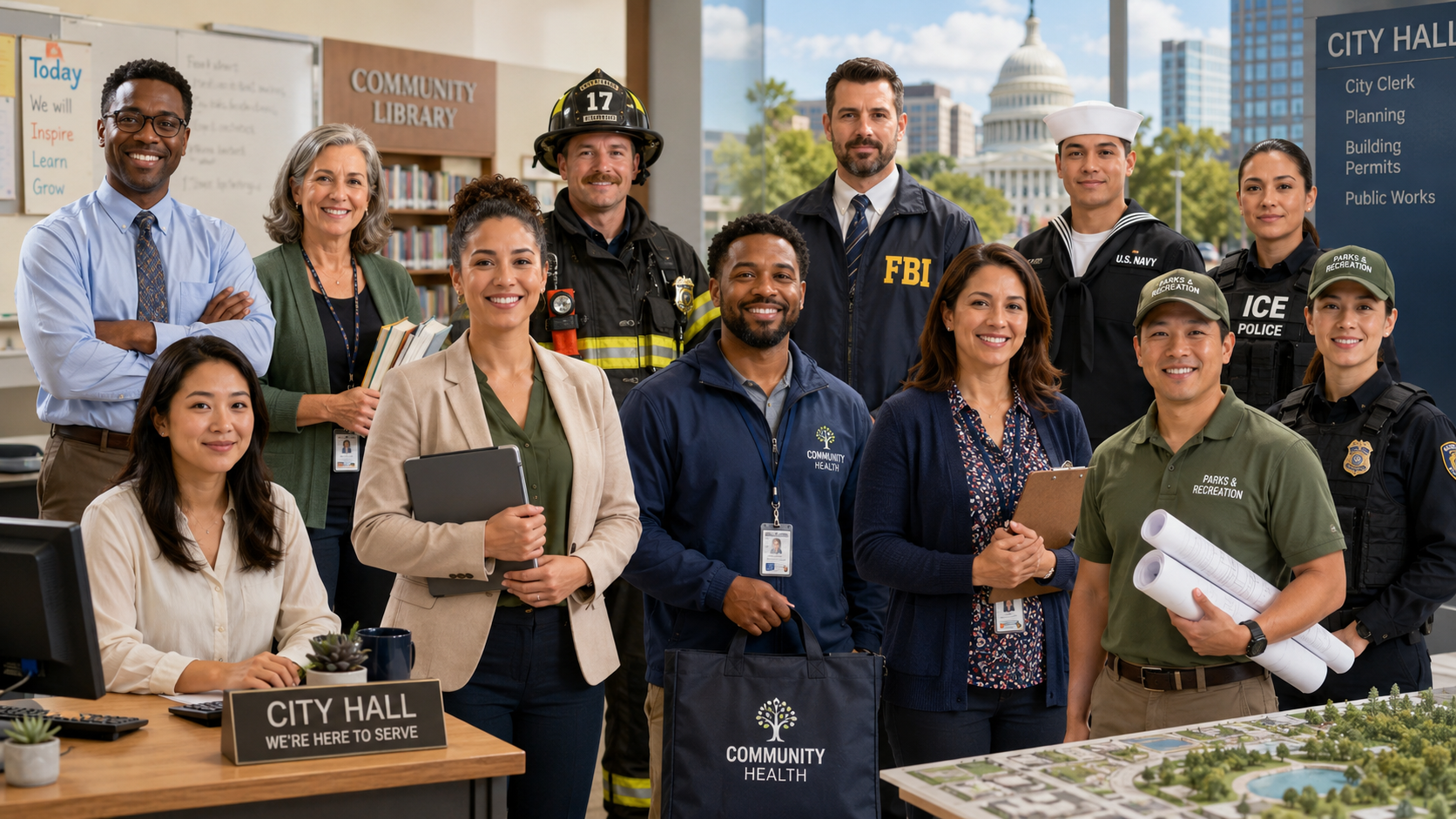
Government Careers
Show moreGovernment jobs offer stability, competitive benefits, and the chance to make a meaningful impact on your community and country.
Whether you’re starting your career or seeking new opportunities, these roles provide pathways for growth, security, and service.
Explore positions across a wide range of fields and take the first step toward a rewarding future in public service.
-